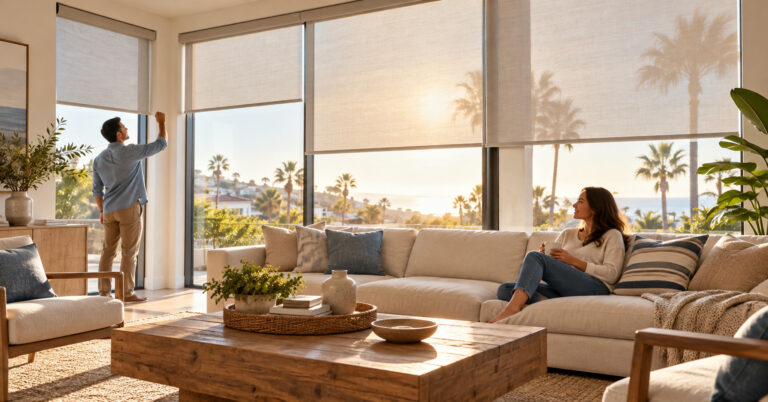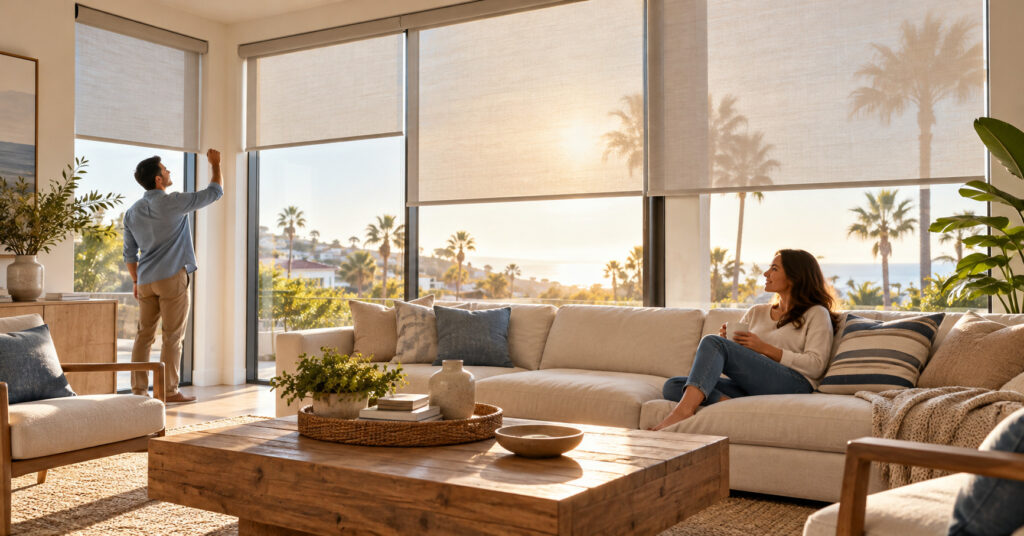
Southern California sunshine is one of the best parts of living here. Bright mornings, clear afternoons, and homes filled with natural light are part of what makes the region so appealing.
But inside the home, all that sunshine can sometimes become a little too much.
A west-facing living room may become intensely bright during the afternoon. A home office can develop uncomfortable glare across a computer screen. Bedrooms may begin filling with light earlier than you would like, while street-facing rooms may need more privacy without sacrificing that open, airy feeling.
The right window shades can help create a better balance.
Rather than blocking the Southern California sun completely, the goal is often to manage it so the home stays bright, comfortable, private, and enjoyable throughout the day.
Start by Watching How Sunlight Moves Through Your Home
Before choosing a shade, take some time to notice what actually happens in each room.
Does bright sunlight enter early in the morning or later in the afternoon? Does it hit a television or computer screen? Does a particular room become noticeably warmer or less comfortable at certain times of day?
Consider:
- When the strongest sunlight reaches the windows
- Whether glare is a problem
- How much privacy you need
- Whether you want to maintain an outdoor view
- How bright or dark you want the room
- How the space is normally used
These details can help determine which type of window treatment makes the most sense.
For homeowners comparing different Orange County window coverings, thinking about each room separately is often more useful than selecting one treatment for the entire home.
Solar Roller Shades for Bright Rooms
Solar roller shades are one of the first options worth considering when a room receives significant direct sunlight.
They are designed to help reduce the intensity of incoming light and glare while maintaining a clean, simple appearance.
Depending on the fabric selected, some solar shades can also preserve a degree of visibility through the window.
That can be useful in Southern California homes where the outdoor view is part of the appeal.
Solar roller shades can work especially well in:
- Living rooms with large windows
- Home offices
- Rooms with strong afternoon exposure
- Spaces where television glare is a problem
- Large windows and glass doors
For homeowners researching Orange County window shades, solar roller shades are just one of several options that can help manage bright Southern California sunlight.
Light-Filtering Shades Can Soften Harsh Sunlight
Not every bright room needs to become dark.
Sometimes the biggest problem is simply that direct sunlight feels too intense.
Light-filtering shades can soften incoming daylight while still allowing the room to remain bright and welcoming.
This can create a comfortable middle ground between leaving the windows completely uncovered and blocking the sunlight altogether.
Living rooms, dining rooms, kitchens, and family spaces can all benefit from this approach when natural light is an important part of the room.
The goal is not always to eliminate sunlight. Often, it is simply to make the light more comfortable.
Cellular Shades Offer Flexible Coverage
Cellular shades are another versatile option for sunny homes.
Their honeycomb-style construction gives them a clean, streamlined appearance, and different fabrics are available to provide different levels of light control and privacy.
A lighter cellular shade may gently filter daylight, while a more substantial fabric can provide increased privacy or greater light reduction.
They can work well in:
- Bedrooms
- Guest rooms
- Living spaces
- Home offices
- Children’s rooms
Their understated appearance can also make cellular shades a good choice for homeowners who want the window treatment to blend into the room rather than become the main design feature.
Sheer Shades Can Preserve a Bright, Open Feeling
Some rooms feel best when they remain full of daylight.
Sheer shades can soften bright sunlight while helping preserve the airy feeling that makes many Southern California homes so attractive.
They may be especially useful in living rooms, dining rooms, and sitting areas where homeowners want some control over sunlight and privacy without making the windows feel heavily covered.
This illustrates an important point: the goal is not always maximum coverage.
Sometimes the best window treatment is the one that lets you enjoy natural light more comfortably.
Roman Shades Bring Design Into the Window
Roman shades offer a different approach because they can become an important part of the room’s interior design.
Fabric, texture, pattern, and color can all be incorporated into the shade.
Depending on the material and lining, Roman shades can range from softly light-filtering to significantly more private.
They also pair beautifully with drapery.
In a bedroom or dining room, layered fabric treatments can introduce softness and dimension while providing additional flexibility with privacy and light control.
Think About Glare Separately From Brightness
A bright room is not necessarily uncomfortable.
Glare is often the real problem.
Sunlight reflecting off a computer monitor, television, countertop, or glossy surface can make a room frustrating to use even if the overall level of natural light is pleasant.
That is why it helps to consider exactly where the sunlight lands.
A home office might need glare reduction around a computer screen.
A living room may need enough coverage to comfortably watch television without losing the outdoor view.
A bedroom may need greater control over early morning sunlight.
The best shade addresses the specific problem rather than simply making the entire room darker.
Privacy Changes After Sunset
Privacy can also be very different during the day and at night.
During daylight hours, outdoor brightness may make it harder to see inside the home.
Once the sun goes down and interior lights are turned on, that can quickly change.
Street-facing rooms and bedrooms deserve particular attention.
When selecting shade fabrics, consider both daytime light filtering and nighttime privacy.
A treatment that feels private at noon may perform very differently after dark.
Bedrooms Often Need More Light Control
Bedrooms typically have different priorities from living rooms.
Privacy and sleep may matter more than maintaining the outdoor view.
Roman shades, cellular shades, and other room-darkening options can all be considered depending on how much early morning light enters the room.
Drapery can also provide another layer of coverage.
And if you are refreshing the rest of the space at the same time, MommyKat’s guide on how to spruce up your bedroom provides additional ideas for creating a more comfortable and inviting room.
Window Shades Aren’t the Only Option
Fabric shades work beautifully in many homes, but they are not the only way to manage Southern California sunlight.
Some homeowners prefer a more architectural window treatment.
Plantation Shutters in Orange County can provide adjustable louvers that allow homeowners to change both the amount and direction of incoming light.
They create a very different look from fabric shades.
Shades May Appeal to Homeowners Who Want:
- Fabric and texture
- Soft light filtering
- Different colors and patterns
- A treatment that can largely disappear when raised
- Numerous levels of opacity
Plantation Shutters May Appeal to Homeowners Who Want:
- Clean architectural lines
- Adjustable louvers
- A built-in appearance
- Straightforward privacy control
- A classic shutter design
Neither option is automatically better.
The right choice depends on the window, the room, and the look the homeowner wants to create.
Consider How Much of the View You Want to Keep
Many Southern California homes have outdoor spaces worth enjoying.
A homeowner may want to maintain views of a garden, pool, hillside, palm trees, or surrounding neighborhood while still reducing glare.
In those situations, a treatment that completely blocks the window throughout the day may not be ideal.
Solar shades and certain light-filtering options can provide a compromise between sunlight control and outside visibility.
Other rooms may require greater privacy, making a less transparent treatment more appropriate.
That is why the same type of shade does not necessarily belong on every window.
Window Direction Matters
The direction a window faces can influence both when and how strongly sunlight enters the room.
East-facing windows often receive stronger morning light.
West-facing windows can become particularly bright in the afternoon.
South-facing windows may receive sunlight for longer periods of the day.
You do not need to become an expert on solar orientation.
Simply noticing when each room becomes brightest can give you useful information before choosing window coverings.
Think About Furniture and Flooring Too
Strong direct sunlight reaches more than the people sitting in the room.
It can also fall across:
- Furniture
- Rugs
- Flooring
- Artwork
- Upholstery
- Decorative fabrics
Being able to lower shades during the brightest portion of the day gives homeowners greater control over how much direct sunlight enters the space.
The shades do not need to remain closed all day.
Often, the best approach is simply being able to adjust them as conditions change.
Motorized Shades Can Make Adjustments Easier
The ideal position of a shade at 9 a.m. may be very different from the ideal position at 3 p.m.
Motorized shades can make those adjustments considerably easier.
They can be especially useful for:
- Tall windows
- Large windows
- Hard-to-reach openings
- Multiple shades in one room
- Rooms where sunlight changes significantly throughout the day
Convenience may seem like a small consideration when selecting window coverings, but it can have a big impact on how often homeowners actually adjust them.
Different Rooms Can Use Different Window Coverings
There is no rule that every window in the house must have an identical treatment.
A sunny home office may use solar shades.
A bedroom may benefit from cellular or Roman shades.
A living room could use sheer shades.
Another room might work better with shutters or blinds.
The treatments can still feel connected through similar colors, textures, wood tones, or hardware finishes.
The goal should be coordination rather than making every window exactly the same.
Find the Right Balance of Sunlight, Privacy, and Comfort
There is no single best window shade for every Southern California home.
The right choice depends on what the homeowner is trying to accomplish.
Solar shades can help reduce glare.
Cellular shades provide flexible coverage.
Sheer shades can soften bright daylight.
Roman shades can introduce fabric and decorative interest.
Plantation shutters offer another approach with adjustable louvers and a more architectural appearance.
Before choosing, think about:
- When direct sunlight reaches the room
- How much glare occurs
- How much privacy is needed
- Whether preserving the outside view matters
- How dark the room should become
- How the treatment fits the surrounding design
Southern California sunshine should be something homeowners enjoy, not something they constantly fight.
The right window treatment can help make that natural light work better for everyday life.
Choosing Window Treatments for an Orange County Home
Homeowners have many different ways to manage sunlight, from solar and cellular shades to Roman shades, sheer treatments, blinds, shutters, and layered window designs.
Shutter Heaven offers a variety of custom options for homeowners comparing Orange County window shades, shutters, blinds, drapery, and other Orange County window coverings.
Whether the priority is privacy, glare control, softer natural light, or a more finished interior design, choosing the right treatment can make a sunny Southern California room much more comfortable.