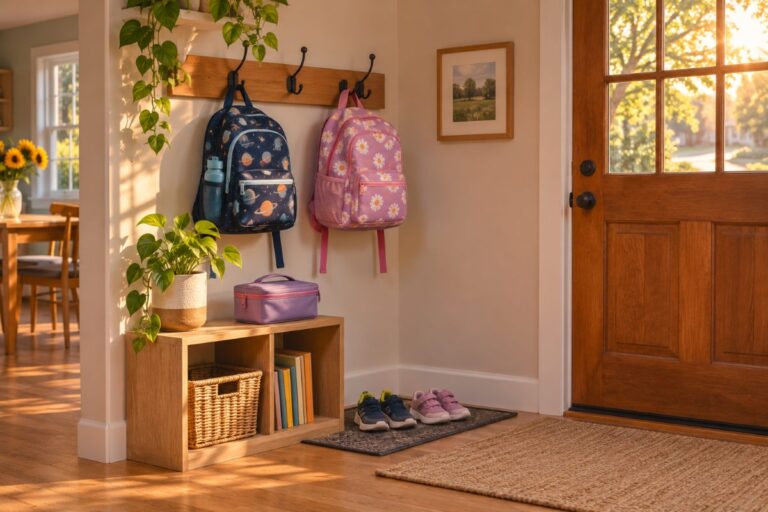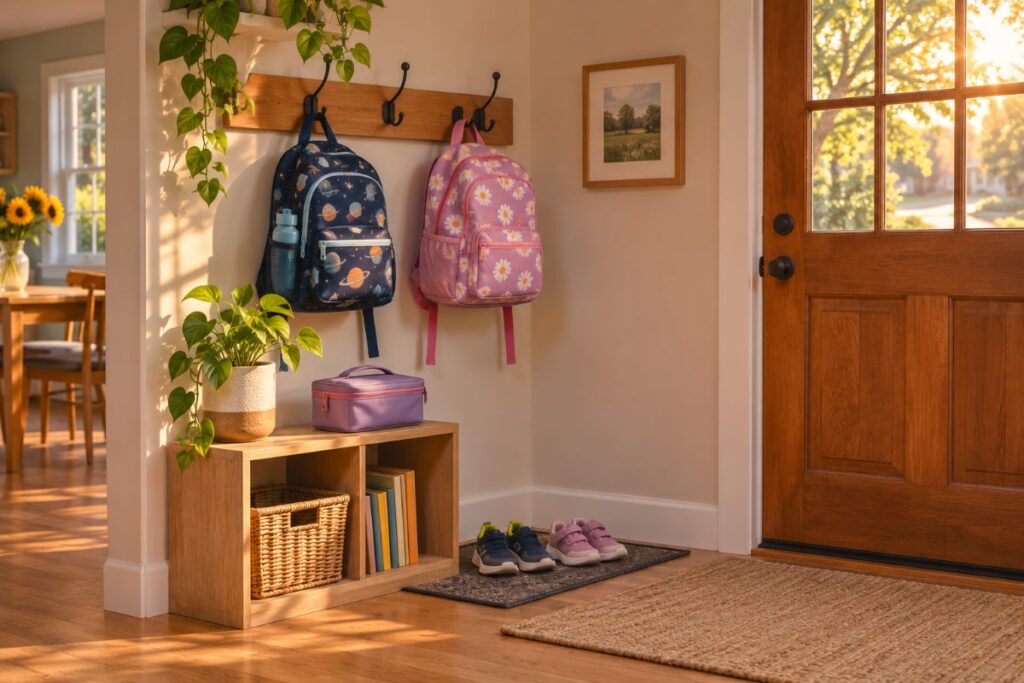
Monday morning has a talent for making a perfectly ordinary backpack disappear. Then someone remembers a permission slip, a water bottle is still drying, and a pair of shoes shows up one shoe at a time. An entryway reset can help because it gives those things somewhere to go while there’s still time to find them. You can set one up with a hook, a basket, and a small piece of floor. You don’t need a mudroom or matching bins.
Watch what actually comes through the door
For a day or two, notice what lands where. Does the backpack go on the kitchen chair because the hook is too high? Are shoes taken off by one door but needed at another? Do papers get tucked under the backpack where nobody will see them until the next day? Make the entryway fit the path your family already uses. A place that looks tidy but takes three extra steps to reach won’t be much help on a busy morning.
If you have a small entryway, choose two or three jobs for it. Shoes, bags, and papers are enough to begin. Put the rest somewhere else. Extra coats and the pile of reusable shopping bags don’t need the prime spot if they’re getting in the way of things the kids need every day.
Give each item a home at the right height
Pick a safe, reachable spot for each child’s backpack and a place nearby for shoes. For younger children, a low bin may work better than a hook they have to stretch to reach. Make sure the arrangement leaves doors and walkways clear. Keep loose cords, heavy items, and anything your child shouldn’t handle out of reach. Place an adult-only paper basket where you’ll see it, rather than next to a pile you’ve learned to ignore.
The point is for your child to be able to do one part of the routine without a grown-up translating the system every day. For some kids that means pictures or simple words on a basket. For others, it means one consistent place and a demonstration on a calm afternoon. Our guide to teaching independence has more ideas for giving children something they can manage themselves.
Move one decision from morning to evening
Choose a small evening reset: check the backpack, put shoes in their place, and move one item you’ll need tomorrow to the exit area. Try the reset right after dinner or before you turn off the downstairs lights. Pick the time your household is most likely to remember. A short routine that happens most nights is more useful than an elaborate one nobody wants to start.
Keep perishables in the refrigerator until morning. If lunch is easy to forget, put an empty lunch bag by the backpack or use a note where you reach for the door. If your child has a changing schedule, a single reusable card can help: “What is different tomorrow?” That could be a library book, shoes for PE, or something for an after-school activity. Put just that exception on the card so your usual setup still does most of the work.
Make a plan for the rushed mornings
On days when you are already late, the entryway should tell you what matters first. Get shoes, backpack, and the essentials. Leave the rest for the next reset. A long checklist can be useful for packing for a trip, but it tends to get ignored while everyone is trying to get out the door. The CDC’s routine guide for parents of younger children explains the usefulness of predictable routines. You can borrow the idea without turning every morning into a chore chart.
If the same thing is missing three days in a row, look at where it lives. A water bottle stored where it dries may need a morning cue. If library books vanish, add a standing spot beside the shoe mat for returns. Rearrange the setup when the problem repeats instead of reminding everyone a little louder. Ask your child what would help them remember. Their suggestion may be more practical than the one you had in mind.
Adapt it when siblings leave at different times
Give each person a clear spot, but keep shared things simple. A pair of scissors, tape, or school forms can live in one adult-managed place. If someone sleeps later, make the first departure routine quiet by doing noisy packing the night before. One adult can handle papers while another runs the leaving checklist, but you can keep the same plan if one person does it all. The arrangement should still work on a morning when someone is out of town.
After a week, clear out anything that didn’t get used. Move a hook if it is awkward, or change the paper tray if it attracts everything except school papers. Notice what you didn’t have to hunt for. That is a better way to judge the setup than whether the entry looks like a catalog. If tomorrow starts with backpacks and shoes where you expect them, you’ve done enough.
Keep a small overflow spot
A big project, sports bag, or instrument may not fit in the normal setup. Pick an overflow spot that doesn’t block the door, and put the item there the night before you need it. If everyone gets home tired, put just that item in place first. The rest of the evening routine can wait a few minutes. This also helps on Fridays, when the papers that came home might matter again Monday but don’t need attention all weekend.